The History of Oud in Arabian Perfumery: A Timeless Fragrance
The History of Oud in Arabian Perfumery begins with a fascinating journey connecting the forests of South and Southeast Asia with the fragrance traditions of the Arabian Peninsula. Although agarwood originates primarily in Asian tree species, it became an important part of Arabian fragrance culture through trade, craftsmanship, and generations of perfume-making knowledge.
The History of Oud in Arabian Perfumery begins with a fascinating journey connecting the forests of South and Southeast Asia with the fragrance traditions of the Arabian Peninsula. Although the aromatic wood originates primarily from Asian tree species, it became an important part of Arabian fragrance culture through trade, craftsmanship, and generations of perfume-making knowledge.
Today, oud appears in concentrated perfume oils, traditional bakhoor, luxurious attars, and contemporary fragrance collections. Understanding its past helps explain why this extraordinary ingredient remains so valuable and why its appeal continues to cross cultural boundaries.
In this guide, we will explore oud’s origins, its historical journey into Arabia, its role in hospitality and daily life, and the evolution of traditional oud fragrances into modern perfumery.
What Is Oud and Where Does It Come From?
Oud, also known as agarwood, is a fragrant resin-rich wood produced by certain trees, particularly species belonging to the Aquilaria genus. These trees grow naturally in parts of South and Southeast Asia, including regions of India, Bangladesh, Indonesia, and other tropical areas.
Healthy trees do not always produce the dark, aromatic material associated with high-quality oud. The fragrant resin develops when susceptible trees experience particular forms of injury, biological stress, and microbial interaction. Over time, these processes can change the wood’s chemical composition and create a distinctive aroma.
Understanding agarwood’s origins is essential to The History of Oud in Arabian Perfumery because the wood’s natural resin gives this treasured ingredient its distinctive and complex fragrance.
How Oud Becomes a Perfume Ingredient
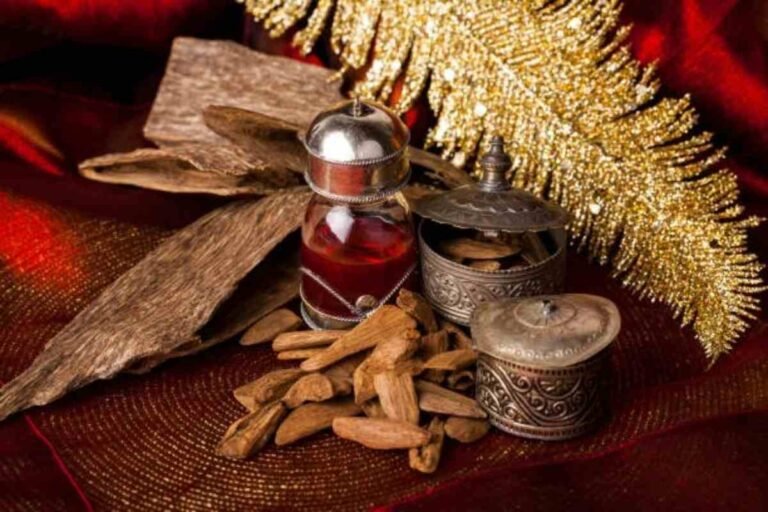
Traditional oud production involves selecting suitable resin-rich wood and processing it to obtain aromatic materials. One established method is steam or hydro-distillation, which extracts volatile fragrance compounds from prepared agarwood. The resulting oud oil is also known as dahn al oud in Arabian fragrance terminology.
The quality and scent profile of the oil depend on several factors, including the quality of the raw material, distillation technique, and the characteristics of the resin.
Oud wood can also be burned as incense, allowing its aromatic compounds to diffuse into the surrounding air. This practice has become particularly important in Arabian hospitality traditions, where fragrant smoke creates a welcoming atmosphere.
The Ancient History of Oud in Arabian Perfumery
The story of oud is older and more geographically complex than its modern association with luxury Arabian perfumes might suggest. Agarwood has a long history across Asia, where it was valued for fragrance, traditional practices, and trade. Its aromatic qualities eventually connected it with wider commercial and cultural networks, including the Arabian Peninsula.
Historical research traces agarwood references to ancient Asian texts and documents its use in the Middle East over many centuries. By the medieval period, it was an established ingredient in Arabic perfumery. The ninth-century perfume literature associated with the scholar al-Kindi, for example, includes recipes featuring agarwood.
These historical records help explain The History of Oud in Arabian Perfumery and show how agarwood became an established ingredient through centuries of fragrance-making knowledge and cultural exchange.
These records demonstrate that oud was not simply a modern luxury trend. It had already become a recognized fragrance material within historical perfume-making traditions.
Oud and the Growth of Arabian Trade
Trade helped bring aromatic woods, resins, spices, and other valuable fragrance ingredients into different parts of the Arabian world. Merchants connected markets across the Indian Ocean and the wider Asian trading network, allowing fragrant materials to travel between producing regions and consumers.
Agarwood’s presence in Arabian perfumery reflects these long-standing connections. The ingredient was valued for its distinctive scent and its ability to contribute depth to complex perfume compositions.
As fragrance traditions developed, oud became associated with refined taste and prestigious perfumery. Its rarity, the labor involved in obtaining quality resin-rich wood, and the skill required to process it helped establish its reputation as a valuable aromatic material.
The History of Oud in Arabian Perfumery is also a story of cultural exchange, bringing together Asian botanical resources, regional trade networks, and Arabian expertise to create a distinctive fragrance tradition.
How Oud Became a Symbol of Arabian Hospitality
In many Arabian communities, fragrance is closely connected with welcoming guests and expressing generosity. Perfume is not merely a personal accessory; it can be part of the atmosphere surrounding family gatherings, celebrations, and important social occasions.
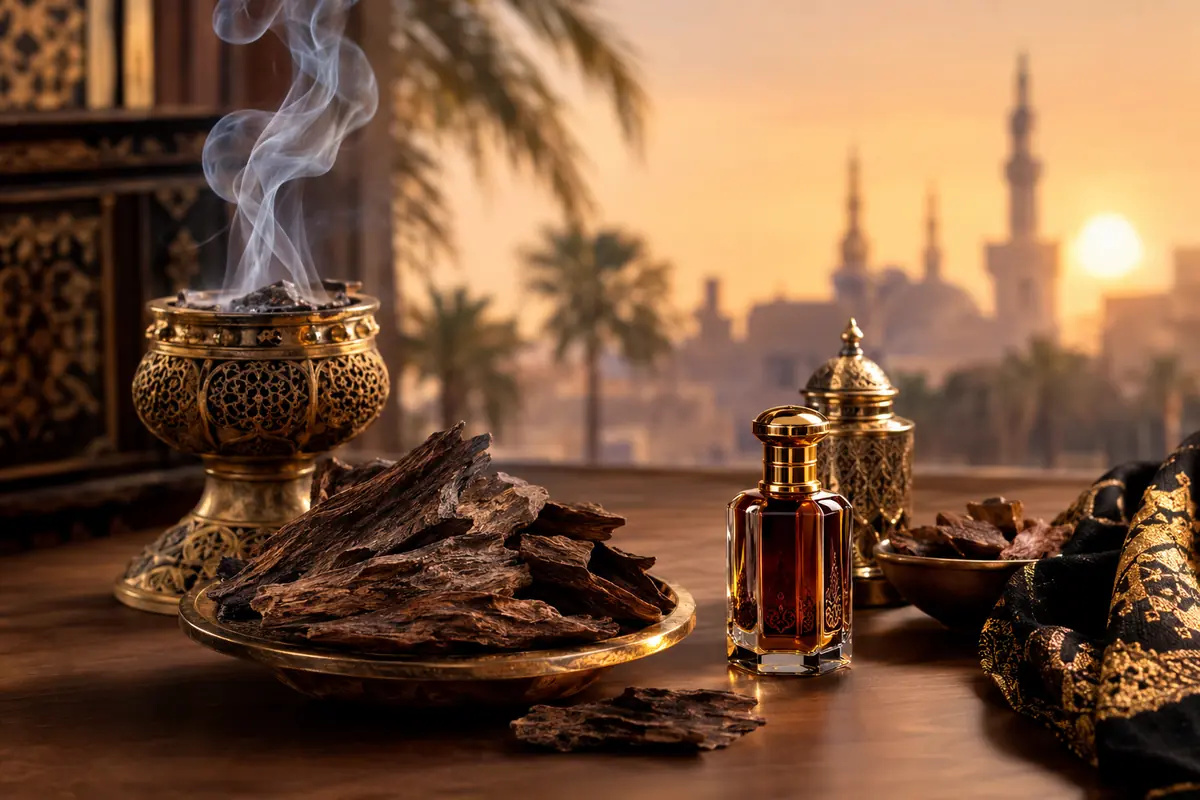
Oud became especially significant within these traditions because of its rich aroma and its suitability for both personal fragrance and incense. Burning oud wood or bakhoor can fill a reception room with a warm, distinctive scent, while perfume oils allow hosts and guests to enjoy fragrance on the skin.
This connection between fragrance and generosity is an important part of The History of Oud in Arabian Perfumery, showing how oud became meaningful beyond its aroma and monetary value.
The Traditional Practice of Offering Fragrance
In some Gulf households, a host may offer guests fragrant smoke from a mabkhara, or traditional incense burner. Guests may gently pass the smoke over their clothing, allowing the scent to settle into the fabric.
The practice varies between families and regions, but it is widely associated with hospitality and respect. Fragrance helps create a memorable setting and can mark a gathering as a special occasion.
Oud-based incense is particularly appreciated for its lasting, layered aroma. Depending on the blend, it may be combined with other fragrant materials to produce a softer, sweeter, or more intense scent.
This cultural significance helps explain why oud continues to occupy a special place in Arabian homes. Its value lies not only in the ingredient itself but also in the experiences and traditions associated with using it.
Oud in Traditional Arabian Perfume-Making
Arabian perfumery has developed a rich vocabulary of aromatic materials, including oud, rose, amber accords, musk, saffron, and various spices. Perfumers combine these ingredients to create fragrances with distinctive personalities, ranging from delicate and floral to dark and intensely woody.
The History of Oud in Arabian Perfumery also reflects the skill of traditional perfumers, who combined oud with complementary ingredients to create layered fragrances for different tastes and occasions.
Historically, oud was used in compound perfumes rather than exclusively as a single-note fragrance. Medieval Arabic perfume literature documents the preparation of complex aromatic mixtures, reflecting the technical knowledge of early perfumers.
Oud Oil and Attar
Concentrated perfume oils have long been valued across the Middle East and South Asia. In Arabian fragrance culture, oud oil is prized for its richness and the way its aroma develops over time on the skin.
An attar is generally a concentrated aromatic perfume, often oil-based. The term covers different traditional preparations, and not every attar contains oud. Some are made from floral or other botanical materials, while others incorporate oud into a blended composition.
Oud oil can be worn alone by those who enjoy its full character or combined with complementary notes to create a more rounded fragrance. Its intensity means that a small application may be sufficient, although performance varies with the oil’s composition and concentration.
The Art of Blending Oud with Other Notes
Oud’s complexity makes it a versatile ingredient for traditional and contemporary perfume creation.
- Rose: Adds a floral, sometimes fresh or velvety quality that contrasts with oud’s deeper woody facets.
- Amber accords: Contribute warmth, sweetness, and a resinous impression.
- Musk: Can soften a composition and create a smooth, lingering base.
- Saffron: Introduces a warm, spicy character that complements the richness of oud.
- Sandalwood: Adds creamy, smooth woody nuances.
- Spices: Bring warmth and complexity, depending on the ingredients used.
These combinations demonstrate how perfumers can adapt oud to different preferences without losing its distinctive character. Some blends emphasize its smoky and earthy qualities, while others highlight its sweeter, smoother, or more floral aspects.
The Role of Oud in Arabian Daily Life and Celebrations
The importance of oud extends beyond formal perfumery. In many Arabian households, fragrance is part of everyday routines as well as weddings, religious occasions, and family celebrations.
Personal perfume oils may be applied before visiting relatives or attending an event. Bakhoor may be burned to freshen a room or create a welcoming environment before guests arrive. The exact practices differ by household, community, and individual preference.
Oud at Weddings and Special Gatherings
Weddings are among the occasions when fragrance can play a particularly visible role. Hosts may prepare their homes or reception areas with incense, while guests may wear rich perfumes suited to the celebration.
Oud is often chosen for evening events because its deep, warm character can complement formal clothing and festive surroundings. However, lighter oud blends can also be suitable for daytime occasions.
Some families use several fragrance styles throughout an event, combining incense for the room with perfume oils for personal use. These choices reflect individual taste rather than a single universal rule.
Oud and Religious Traditions
Fragrant materials have appeared in various religious and spiritual traditions across different regions. Agarwood has historical associations with incense and devotional settings in parts of Asia and the Middle East.
In Muslim communities, fragrance is valued in many personal and social contexts, although practices differ and oud is not a requirement of religious observance. Its use should therefore be understood as part of broader cultural and fragrance traditions rather than as a universal religious obligation.
This distinction helps preserve the historical importance of oud without overstating the role it plays in any particular belief system.
Traditional Oud Incense and the Importance of Bakhoor
Bakhoor is a broad term used for fragrant materials burned to release aromatic smoke. Depending on the preparation, it may contain wood chips, fragrant oils, resins, and other ingredients.
Oud is an important material in some bakhoor preparations, but not all bakhoor contains natural agarwood. Some blends use other woods or fragrance compounds to create a similar warm, woody atmosphere.
How Oud Bakhoor Is Used
Traditional incense burning involves placing suitable fragrant material in or above a heat source, depending on the burner and preparation. When heated correctly, the ingredients release their aroma into the surrounding space.
Oud-based bakhoor may smell smoky, woody, sweet, or resinous. Other ingredients can add floral, spicy, or amber-like qualities.
In Arabian homes, incense is often associated with welcoming visitors, preparing rooms for celebrations, and creating a pleasant atmosphere. Its use also illustrates the difference between wearing perfume and fragrancing a space: concentrated oud oil is applied to the skin, while bakhoor is intended to release fragrance into the air.
When burning incense, users should follow the product instructions, keep the burner on a stable, heat-resistant surface, maintain suitable ventilation, and keep it away from curtains and other flammable materials.
How Oud Evolved into Modern Luxury Perfumery
Although oud has deep historical roots, its presence in contemporary perfumery continues to evolve. Modern fragrance houses use it in a wide variety of compositions, from traditional oil-based blends to alcohol-based eau de parfum and more experimental niche fragrances.
The History of Oud in Arabian Perfumery continues today as modern fragrance houses reinterpret traditional oud aromas in contemporary perfumes while drawing inspiration from their cultural roots.
The modern popularity of oud reflects both its established reputation in the Middle East and growing interest in distinctive woody scents around the world.
Traditional Fragrance Meets Modern Innovation
Contemporary perfumers may combine natural oud oil, agarwood extracts, carefully selected fragrance ingredients, and oud-inspired accords. These approaches allow them to explore different scent profiles, control costs, and develop fragrances for a wide range of consumers.
Not every perfume marketed as an oud fragrance contains natural oud oil. Some rely on synthetic or blended accords designed to evoke its smoky, woody, leathery, or resinous character. This is not automatically an indication of poor quality; the overall composition and transparency of the product matter.
Modern formulations can also make oud more approachable for people who find traditional oils too intense. A fragrance may balance oud with citrus, florals, vanilla, woods, or musk to create a lighter and more versatile result.
Oud’s Global Appeal
Oud has become a recognizable feature of luxury fragrance collections in Europe, North America, Asia, and the Middle East. International perfume houses have explored its character in both bold compositions and softer blends.
This global interest has introduced more people to an ingredient that already held a long-standing place in Arabian and Asian fragrance cultures. At the same time, contemporary oud perfumes do not all smell alike. Some are sweet and smooth, while others are dry, smoky, earthy, or animalic.
The continuing evolution of oud demonstrates how traditional ingredients can inspire new creative directions while retaining their historical significance.
Why High-Quality Oud Is So Valuable
Natural oud can be expensive because obtaining desirable resin-rich agarwood is difficult. Fragrant resin does not develop uniformly in every tree, and the quality of the resulting material varies considerably.
Harvesting, selecting, preparing, and distilling suitable wood also require knowledge and labor. The yield and aroma of the extracted oil depend on the raw material and production method, so not all oud oils have the same value.
Natural Oud and Sustainable Sourcing
Wild agarwood resources face conservation concerns, including pressure from harvesting and international trade. Several Aquilaria species are covered by international trade controls under the Convention on International Trade in Endangered Species of Wild Fauna and Flora (CITES).
Responsible sourcing is therefore an important consideration when buying natural oud. Buyers can look for transparent information about origin, cultivation, traceability, and compliance with applicable regulations.
Cultivated agarwood can contribute to supply, although quality and environmental outcomes depend on how it is produced and managed. Sustainable practices help support the future availability of this remarkable fragrance material.
How to Choose an Oud Fragrance Today
Understanding oud’s history can make choosing a modern fragrance more enjoyable. Instead of assuming every oud perfume will smell dark or overpowering, explore different styles and consider how you plan to wear the fragrance.
For everyday wear: Choose a lighter composition that combines oud with fresh woods, soft musk, or subtle floral notes.
For evening occasions: Try a richer blend featuring amber, spices, rose, or deeper woody accords.
For traditional fragrance rituals: Explore oud oils, agarwood chips, or bakhoor from reputable sellers, checking the ingredients and intended method of use.
For beginners: Start with a balanced oud fragrance rather than a highly concentrated oil if you are unsure about its intensity.
Whenever possible, test a fragrance on your skin and allow it time to develop. Oud compositions can change noticeably from the opening to the dry-down, so the first few minutes may not reveal the complete scent.
Conclusion: The Lasting Legacy of Oud in Arabian Perfumery
The story of oud connects botanical resources, ancient trade, traditional craftsmanship, hospitality, and modern fragrance innovation. Its journey from agarwood-producing regions in Asia to an established ingredient in Arabian perfume culture illustrates how fragrances can travel across borders and acquire new meanings within different societies.
The History of Oud in Arabian Perfumery is ultimately a story of continuity and change. Oud remains associated with rich aromas, personal expression, welcoming guests, and special occasions, while contemporary perfumers continue to reinterpret it through new materials and creative blends.
Whether enjoyed as concentrated oud oil, a traditional bakhoor preparation, or a modern luxury perfume, this remarkable ingredient offers a connection to centuries of fragrance knowledge. Its enduring appeal comes from more than rarity or prestige: it lies in the depth of its aroma and the traditions that have kept it meaningful across generations.