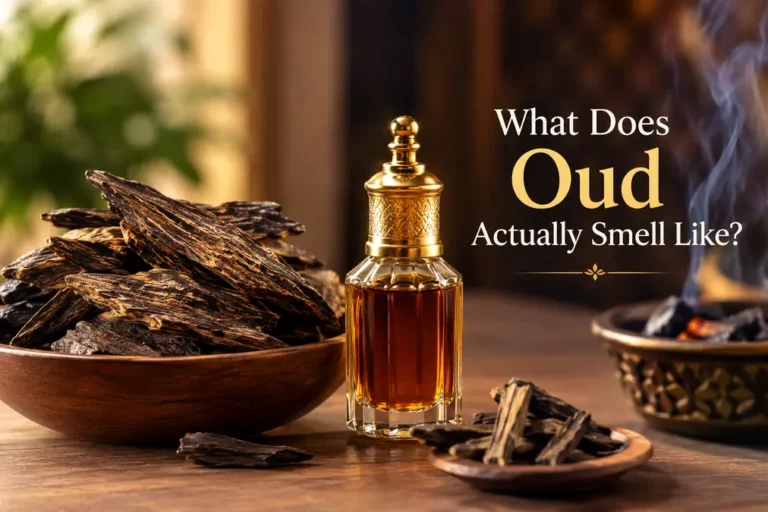
What Does Oud Actually Smell Like? Discover Its Rich, Mysterious Aroma
Imagine walking into a room filled with the warm scent of dark wood, delicate smoke, sweet amber, and luxurious perfume. The fragrance feels deep, mysterious, and unforgettable. What creates this distinctive aroma? One possible answer is oud! But What Does Oud Actually Smell Like? The answer is more fascinating than you might expect.
Is oud sweet, smoky, earthy, leathery, or something completely different? If you have ever wondered why oud perfumes are so popular among fragrance lovers, discovering what oud actually smells like will help you understand the magic behind this precious ingredient.
Oud is famous for its rich, complex aroma, but describing it with a single word is almost impossible. Some varieties smell smooth and woody, while others reveal smoky, medicinal, fruity, or animalic notes. When exploring What Does Oud Actually Smell Like?, remember that its scent depends on the agarwood itself, its origin, the extraction process, and the way perfumers blend it with other ingredients.
In this guide, you will discover the different oud scent profiles, how natural oud compares with modern oud perfumes, why its aroma changes over time, and how to find a fragrance that suits your personal taste. By the end, you will have a clearer understanding of what oud actually smells like and which oud fragrance style might be right for you.
What Does Oud Actually Smell Like? Understanding Its Signature Aroma
Oud, also called agarwood, is a fragrant, resinous material that develops in certain trees, particularly those belonging to the Aquilaria genus, following particular forms of injury and biological stress. If you wonder What Does Oud Actually Smell Like, understanding its origin is a great place to start. This precious resin-rich wood is highly valued for its distinctive aroma and is used in traditional incense, oud oil, and luxury perfumery.
So, what does oud actually smell like when you experience it for the first time?
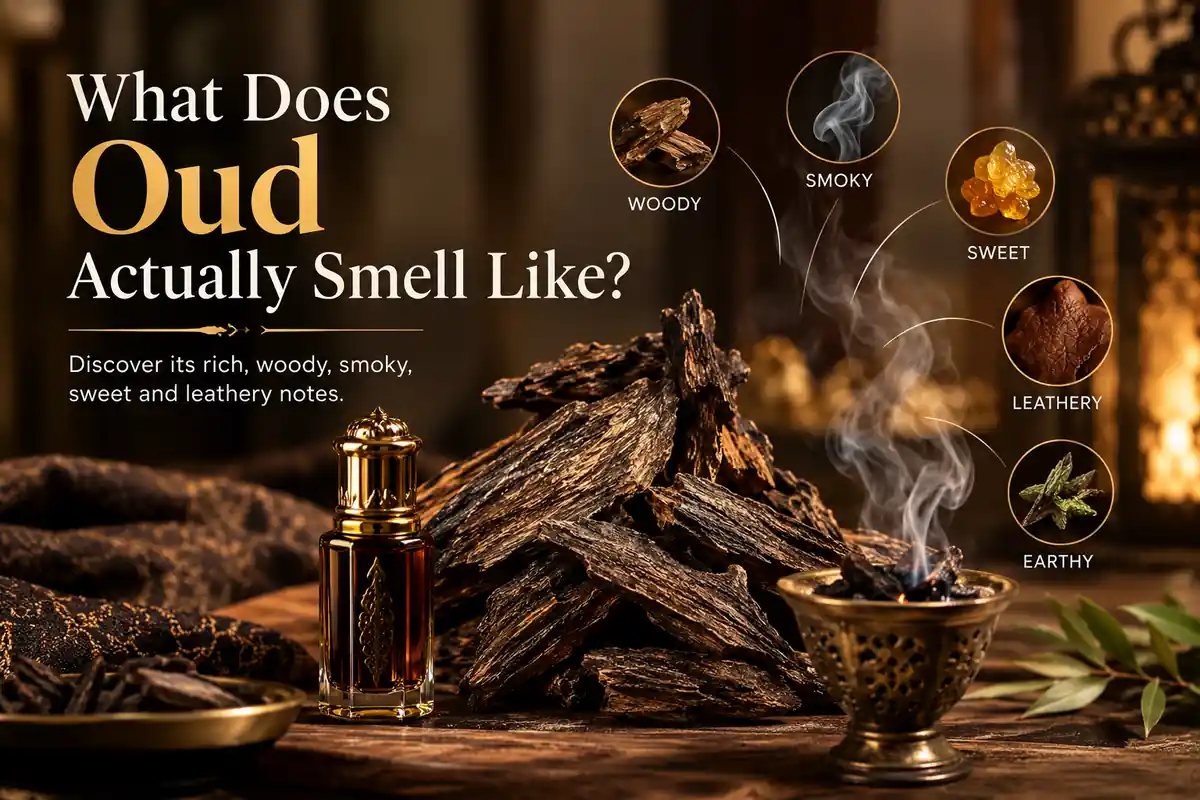
Imagine the smell of dark wood after rain, a gentle trail of incense smoke, and the warm sweetness of tree resin. Now add a slightly leathery depth, a hint of spice, and sometimes an unusual medicinal edge. These layers help explain what oud actually smells like and why it smells so different from ordinary woody perfumes.
Here are the main scent characteristics you may notice when exploring What Does Oud Actually Smell Like.
- Woody: Deep, rich, dry, and sometimes reminiscent of aged timber.
- Smoky: Similar to incense, smouldering wood, or fading embers.
- Earthy: Reminiscent of damp bark, forest soil, and natural woodland.
- Sweet: Warm and resinous, sometimes suggesting honey, amber, or dried fruit.
- Leathery: Dark, smooth, and reminiscent of well-worn leather.
- Medicinal: Sharp, herbal, or camphor-like in certain varieties.
- Animalic: Musky and earthy, sometimes challenging for people who prefer clean, fresh fragrances.
Not every oud contains all these characteristics. Some perfumes highlight sweetness and smooth woods, while others emphasise smoke, leather, or earthy depth. Ultimately, what oud actually smells like depends on the particular oud oil or perfume composition. That diversity is precisely what makes oud so intriguing.
Why Does Oud Have Such a Unique and Powerful Smell?
Oud’s distinctive scent begins with the formation of fragrant resin inside agarwood trees. When certain trees experience injury and biological stress, they can develop aromatic compounds that gradually change the character of the affected wood. If you have ever wondered What Does Oud Actually Smell Like, this natural process helps explain why its aroma can be so rich, complex, and different from one variety to another.
The resulting resin-rich material may contain a complex mixture of fragrance compounds. When the wood is processed or distilled, those compounds contribute to the distinctive aroma associated with oud. This is one reason why oud actually smells like it can range from sweet and woody to smoky, earthy, or medicinal.
However, the scent is not determined by resin alone. Several factors influence the final fragrance and help explain why different oud oils and perfumes have unique aromatic profiles.
1. Tree species and growing conditions: Different species and environments can produce different aromatic characteristics, affecting whether an oud smells smooth, woody, earthy, or intense.
2. Geographic origin: Agarwood from different regions may have different balances of woody, sweet, smoky, and medicinal notes. These variations make exploring What Does Oud Actually Smell Like? particularly interesting for fragrance lovers.
3. Resin development and wood quality: The characteristics of the resin-rich wood influence the resulting oil’s aroma, including its depth, richness, and complexity.
4. Distillation method: The way agarwood is processed can affect the complexity and balance of the extracted oil, influencing how its different scent notes are perceived.
5. Fragrance formulation: When perfumers blend oud with rose, amber, musk, vanilla, or
The Main Types of Oud Smell You Should Know
Oud is not a one-note fragrance. Understanding its main scent profiles makes it easier to discover which style you might enjoy.
1. Woody Oud: Deep, Warm, and Sophisticated
Woody oud is a natural starting point for understanding the fragrance family. Its aroma centres on dark wood, warm resin, and a smooth, grounded character.
Rather than smelling like freshly cut timber, some woody oud fragrances suggest aged wood polished to a rich finish. They can feel elegant without being excessively sweet or smoky.
Who might enjoy it? People who appreciate sandalwood, cedar, vetiver, and other deep woody fragrances may find this style appealing.
2. Smoky Oud: Bold, Dark, and Mysterious
Smoky oud brings incense-like depth to a fragrance. Picture the gentle smoke rising from burning aromatic wood, leaving a warm, dry trail in the air.
Depending on the composition, the smoke may feel subtle and refined or dark and intense. Some traditional oud oils also have a strong earthy character that adds to this impression.
Smoky oud can be particularly appealing for evening wear, formal occasions, and people who enjoy distinctive fragrances.
However, if you usually wear light citrus or fresh aquatic perfumes, a very smoky oud might feel overwhelming at first.
3. Sweet Oud: Warm, Smooth, and Inviting
Not all oud is dark and challenging. Sweet oud fragrances combine woody depth with warmer notes that make the overall aroma feel rounded and approachable.
Amber, vanilla, honey-like accords, and certain fruity notes can give oud a soft sweetness. Rose can add a velvety floral character, creating a rich fragrance that feels luxurious rather than sharp.
Sweet oud is often a useful introduction for beginners because its warmer notes can balance the darker aspects of the composition.
4. Leathery Oud: Rich, Dry, and Refined
Leathery oud has a darker personality. Its aroma may suggest worn leather, polished wood, and a subtle earthy warmth.
Some compositions also include tobacco, spices, or smoky notes, making the fragrance feel deeper and more dramatic.
If you enjoy fragrances with a strong character and a sophisticated, dry finish, leathery oud may be worth exploring.
5. Earthy and Medicinal Oud: Raw and Unusual
This is the side of oud that surprises many first-time users.
Certain natural oud oils can smell earthy, herbal, or medicinal, with notes reminiscent of damp bark, camphor, or an aromatic herbal balm. Some also have animalic nuances that may seem unusual if you are accustomed to conventional designer perfumes.
These characteristics are not necessarily signs of poor quality. They can be part of a particular oud’s natural aromatic profile, although the smell alone cannot establish its authenticity or quality.
If this style seems too intense, try a blended oud perfume that balances its darker facets with amber, rose, vanilla, or musk.
How Does Oud Smell in Different Regions?
The origin of agarwood can influence its aromatic profile, although no region produces one completely uniform scent. Species, growing conditions, resin development, processing, and individual batches all matter.
Here are some broad tendencies often associated with different oud origins.
| Oud origin | Commonly described scent tendencies |
|---|---|
| Cambodian | Sweet, warm, sometimes fruity or resinous |
| Indian | Deep, earthy, often smoky or animalic |
| Indonesian | Woody, herbal, sometimes earthy or medicinal |
| Malaysian | Woody, dry, and sometimes smoky |
| Other Southeast Asian origins | Highly variable, ranging from soft and sweet to dark and complex |
Think of these descriptions as general guides rather than strict rules. An Indian oud is not always stronger than a Cambodian oud, and two oils from the same country can smell very different.
If you are exploring oud for the first time, sample different origins when possible instead of relying on a label alone.
Natural Oud vs. Synthetic Oud: Is There a Difference?
Yes! Natural oud oil and fragrances created with modern oud accords can smell quite different, although there is no single scent that defines either category.
Natural oud oil is distilled from resinous agarwood. Depending on its composition, it may have layered woody, smoky, sweet, earthy, medicinal, or animalic characteristics.
Modern oud accords are created using fragrance ingredients chosen to evoke particular aspects of oud. These can include woody, smoky, resinous, and musky materials. Some formulas may also incorporate natural oud alongside other ingredients.
The result can be a smooth, polished fragrance that makes oud easier to wear, particularly for beginners.
Here is a simple comparison:
| Feature | Natural oud oil | Modern oud accord |
|---|---|---|
| Scent profile | Can be complex and variable | Can be tailored to a specific style |
| Aroma | May include earthy, smoky, or medicinal facets | Often designed to be smooth, sweet, woody, or smoky |
| Consistency | Varies with the material and production | Depends on the formula and ingredients |
| Price | Quality natural oud can be expensive | Available across a wide range of prices |
Neither category automatically smells better. Your preference depends on whether you enjoy the raw complexity of natural oud or the more controlled character of a blended perfume.
Also, the word “oud” on a perfume label does not prove that the fragrance contains natural oud oil. Check the manufacturer’s ingredient information when this distinction matters to you.
How Does Oud Smell in Perfumes, Oils, and Bakhoor?
The form in which you experience oud can change your impression of its aroma.
Oud perfume: A blended fragrance may smell sweet, floral, smoky, or woody depending on its other ingredients. Citrus can brighten the opening, rose can soften the composition, and amber can add warmth.
Pure oud oil: Oud oil is concentrated and can have a complex aroma that develops gradually. Depending on the oil, you may notice earthy, medicinal, woody, or sweet notes as it settles.
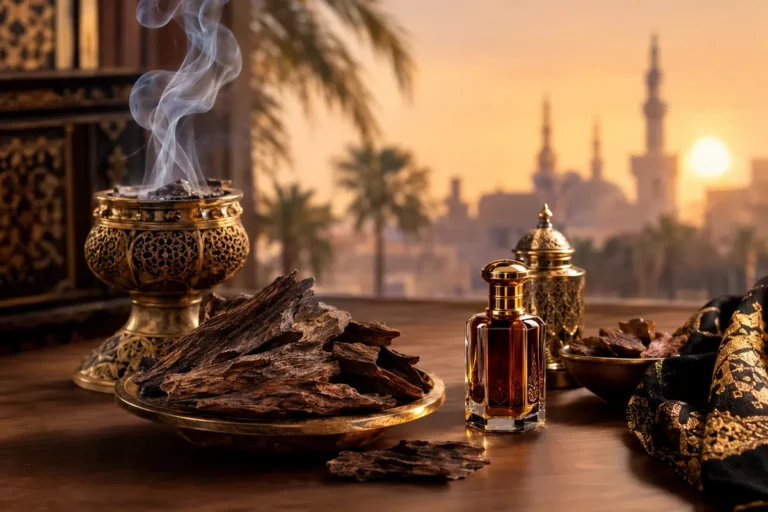
Bakhoor and incense: When oud-containing wood or scented incense is heated or burned, its aroma becomes more atmospheric. Smoke and the other ingredients in the bakhoor can influence the final smell, creating a warm fragrance that spreads through a room.
These experiences are related, but they are not identical. A perfume containing an oud accord may smell quite different from a piece of resinous agarwood heated as incense.
Does Oud Smell Different on Everyone?
Absolutely! A fragrance can seem sweeter, sharper, or more intense to one person than another.
Your perception of oud is influenced by several factors, including skin temperature, the fragrance formula, the surrounding environment, and your individual sensitivity to particular aroma compounds.
The fragrance also changes as it develops. A sharp or smoky opening may gradually become warmer and smoother, while a sweet blend may reveal deeper woody notes later.
Your personal memories and scent preferences matter, too. Someone who loves incense may find smoky oud comforting, while someone who prefers fresh laundry scents may initially find the same fragrance heavy.
This is why testing oud on your skin is more useful than deciding from a bottle description alone.
How to Choose an Oud Perfume If You Are a Beginner
If you are new to oud, there is no need to begin with the strongest or most expensive fragrance you can find. Start with a style that matches the scents you already enjoy.
- If you love sweet perfumes: Try amber oud or rose oud with a soft, warm finish.
- If you prefer fresh fragrances: Look for a lighter composition that combines woody oud with citrus or aromatic notes.
- If you enjoy woody scents: Explore smooth oud blends featuring sandalwood or cedar.
- If you like bold fragrances: Try a darker oud with smoky, leathery, or spicy notes.
Before buying a full bottle, test a small sample if possible.
Apply a modest amount according to the product instructions, then notice how it smells immediately and after 30–60 minutes. You can also check it again later in the day to see whether the dry-down suits you.
Avoid testing too many powerful fragrances at once, because your nose can become fatigued. Compare a few styles on separate occasions and choose the one you genuinely enjoy wearing.
Remember, an expensive perfume is not automatically the right perfume for you. The best oud is the one whose character suits your taste, setting, and comfort level.
Frequently Asked Questions About Oud’s Smell
Does oud smell good?
Oud can smell rich, warm, woody, smoky, sweet, or leathery. Whether it smells good is subjective: some people love its depth, while others prefer lighter fragrances. Trying different styles is the best way to discover your preference.
Is oud a strong smell?
Oud can be intense, particularly in concentrated oils and smoky compositions. However, some modern oud perfumes are soft, smooth, and subtle. Strength depends on the formula, concentration, and amount applied.
Does oud smell like wood or smoke?
It can smell like both. Woody notes often provide its foundation, while smoky or incense-like facets appear in some varieties and fragrance blends. Other ouds lean more towards sweetness, earthiness, or leather.
Why does some oud smell medicinal?
Certain oud oils contain aromatic characteristics that people describe as herbal, camphor-like, or medicinal. This can be part of their natural scent profile, but it does not by itself prove that an oil is genuine or high quality.
Is oud suitable for everyday wear?
Yes. Softer oud perfumes can work well for everyday use, while richer smoky or leathery styles may suit evenings and special occasions. Start with a light application and consider the setting.
Does oud last a long time?
Many oud fragrances have a persistent woody base, but longevity varies considerably. The ingredients, concentration, skin, weather, and application all affect how long a fragrance remains noticeable.
Final Thoughts: Discover the Oud Scent That Suits You
So, what does oud actually smell like? The simplest answer is that oud smells like deep, resinous wood, but its full character can extend into smoky incense, earthy forest notes, warm sweetness, leather, and even medicinal or animalic nuances.
That complexity is what makes oud so fascinating. No single description captures every variety, and no two oud fragrances need to smell alike.
If you are a beginner, start with a softer amber-oud or rose-oud blend. If you enjoy bold, distinctive scents, explore darker and smokier compositions. Give every fragrance time to develop before deciding whether you like it.
Your perfect oud does not have to be the strongest or most expensive one. It simply has to be the scent that makes you want to experience it again.

One Comment